Astronomy Site

Parimah Salehi Clock World


Some of you use circles to categorize people in different interest groups, and though I'm interested in lots of stuff you might wanna put me in circles like >>>

Science  : General science and especially astronomy, physics and space technology and Rocket technology - also mostly stuff concerning science and space , astronomy and Missiles Technology or satellites and aerospace and Hubble Space Telescope. 

Mostly I do post science related stuff but be aware I'll write about anything that comes to mind. Just have a look at my posts and you'll see what exactly is going on, aerospace and astronomy  


If you expect an answer please stay nice and don't be a ,,,,, it would also be a good idea to write Persian or German .  French and Spanish  is also possible, but since my Spanish and  French is quite rusty I'll most probably answer Persian or Turkish or English
Sombrero Galaxy 

Spitzer found that halo around the Sombrero Galaxy is larger and more massive than previously thought, indicative of a giant elliptical galaxy . The galaxy has an apparent magnitude of + 9.0, making it easily visible with amateur telescope, and it's considered by some authors to be the brightest galaxy within of 10 megaparsecs of the Milky Way. The large bulge, the central supermassive black hole, and the dust lane all attract the attention of professional astronomers 

Credit , ESO Telescope, European Space Agency 

The Carina nebula is much less well known , due to its location in the southern sky  , ESO , VTL , Telescope , Chile 

Helix Nebula 

The Helix Nebula is an example of a planetary nebula, or 'planetary' formed at the end of a star's evolution. Gases from the star in the surrounding space appear, from our vantage point, as if we are looking down a helix structure. The remnant central stellar core, known as a planetary nebula nucleus or PNN, is destined to become a white dwarf star. The observed glow of the central star is so energetic that it causes the previously expelled gases to brightly fluoresce.
The Helix Nebula in the constellation of Aquarius lies about 700 light-years away, spanning about 0.8 parsecs (2.5 light-years). Recent images by the Hubble Space Telescope of the Helix Nebula are a composite of newly released images from the ACS instrument and the wide-angle images from the Mosaic Camera on the WIYN 0.9-metre telescope at Kitt Peak National Observatory.

Helix Nebula 
The Helix Nebula in the constellation of Aquarius about 700 light-years away, spanning about 0.8 parsecs - 2.5 light-years - Recent images by the Hubble Space Telescope of the Helix Nebula are a composite of newly released images from the wide-angle images from the Mosaic Camera on the , WIYN 0.9 metre telescope at Kitt Peak National Observatory . 

Green Nebula 
By  Radio Telescope 

The Cygnus Loop -  radio Source . W 78 , or .Sharpless , 103 - is a large supernova remnant . SNR . in the constellation Cygnus , an emission  nebula measuring nearly , 3 , across . N1. Some arcs of the loop , known collectively as the Veil Nebula or Cirrus Nebula emit in visible light . N2 . Radio , infrared and X - ray images reveal the complete loop 

The Orion Nebula - also known as Messier 42,  M42, or ,  NGC 1976 

LMC - N49, or, Supernova remnant .
N 49 , or, Stellar shrapnel, is the brightest supernova remnant in the Large Magellanic Cloud, approximately 160,000 light - years from Earth. It has been assessed to be roughly 50,000 years old. The latest pictures of N 49 by the Chandra X - Ray Observatory have revealed a bullet - shaped object traveling at about 5 million miles an hour away from a bright X - ray and gamma - ray point source, probably a neutron star with an extremely powerful magnetic field, known as a soft gamma repeater particularly strong from LMC N49 was detected on March 17. 2014 

The apparent magnitude of the Andromeda Galaxy , at , 3. 4 , is one of the brightest of any of the Messier objects , N , making it visible to the naked eye on moonless nights even when viewed from areas with moderate light pollution Although it appears more then six times as wide as the larger telescope , only the brighter central region is visible to the naked eye or when viewed using binoculars or a small telescope . making it appear similar to a star .  ESO Telescope  


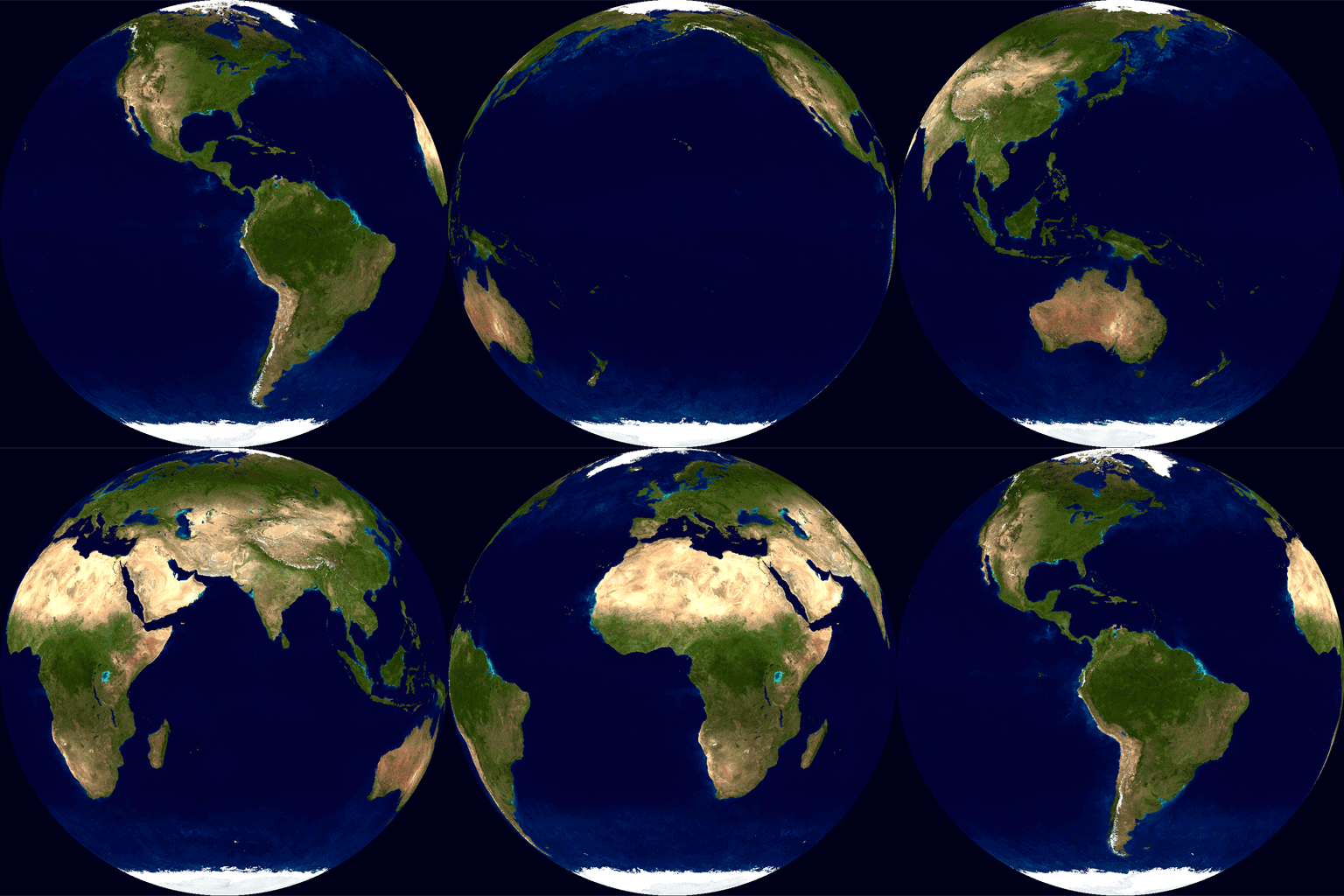
                       Earth   From  Space    NASA       GIF                     
                      Collide   Galaxy    Only   JPG                    
                    Solar  System  New  2015   GIF                
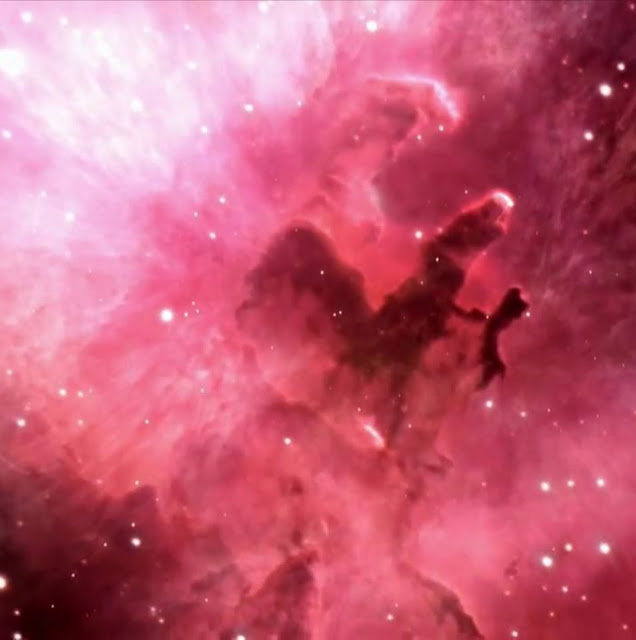
                         Galaxies  and  Nebula  GIF                     

                      Solar  System  2007  GIF                      
                                From  NASA    GIF